
ŠTO TE NEMA transforms public memory into a catalyst for action. Through participatory art and collective ritual, we turn remembrance into a shared responsibility—towards a future free from genocide.

2025
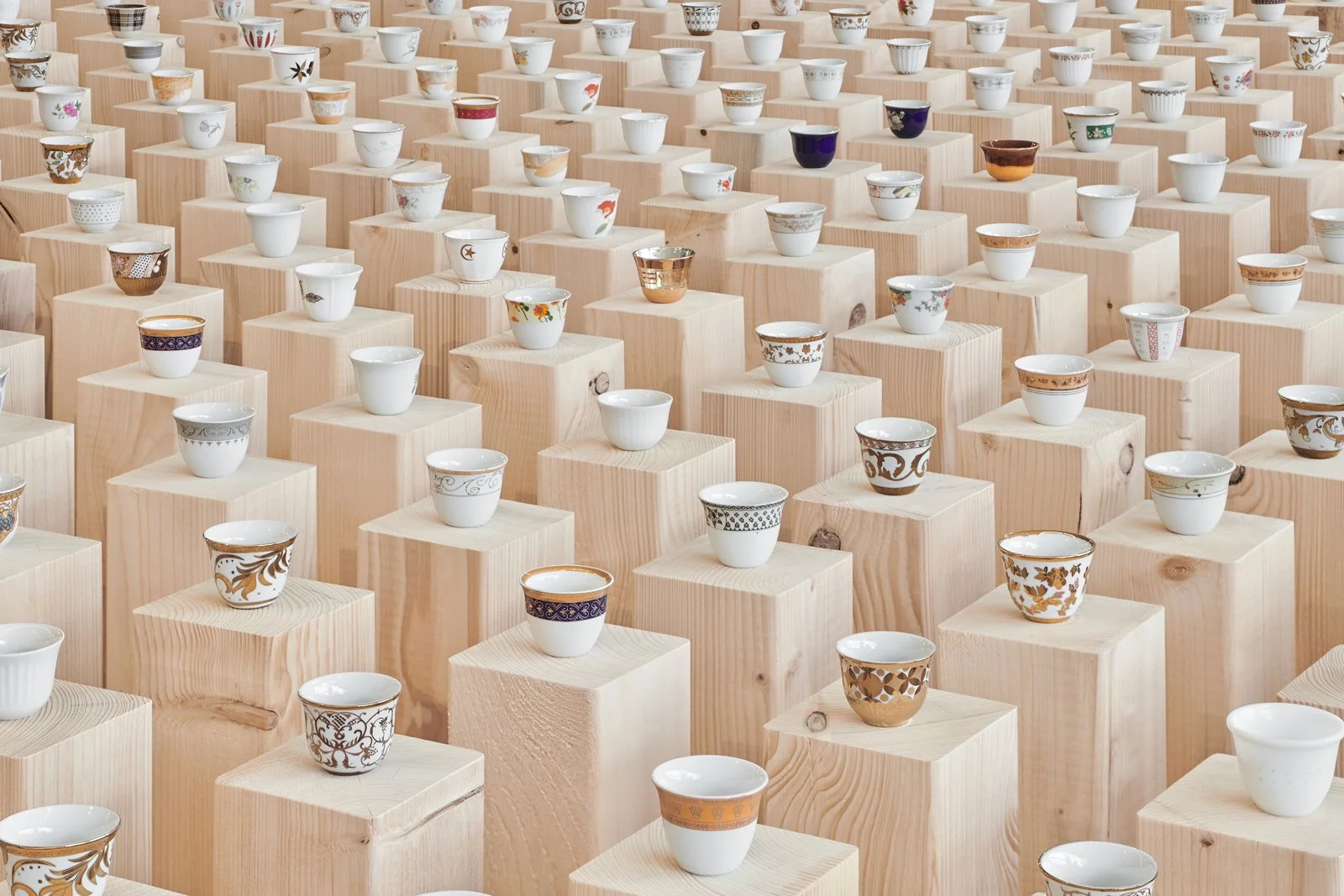
photo credit: Max Hart Nibbrig
The Search for Permanent Form
In 2025, Cups of Memory premiered at KM21 / Kunstmuseum Den Haag as a collaboration between artist Aida Šehović (ŠTO TE NEMA) and architect Arna Mačkić (Studio L A), reflecting the growing resonance of the work and its ongoing exploration of how spaces of remembrance shape emotional and civic landscapes. Rooted in ŠTO TE NEMA, the exhibition reimagined the nomadic monument within a museum setting through images and testimonies of survivors, descendants, witnesses, and collaborators. In the same year, Spatium Memoriae was exhibited at Akademie Graz and Karmelitenkirche in Munich.
2024

photo credit: Sarajevo Film Festival
From Monument to Cinematic Testimony
After four years of production and more than 500 hours of filmed footage, Where Have You Been, a feature-length documentary by Pinch Media Film and ŠTO TE NEMA, premiered at the 30th Sarajevo Film Festival. Tracing the monument’s movement across cities, communities, and generations, the film interwove archival material, first-person accounts, and observational footage to illuminate the work’s evolving meaning. Following its premiere, the documentary entered international circulation through industry and festival platforms including IDFA Docs for Sale, FIPADOC, and the Eastern Neighbours Film Festival, expanding professional dialogue and audience engagement.
2023
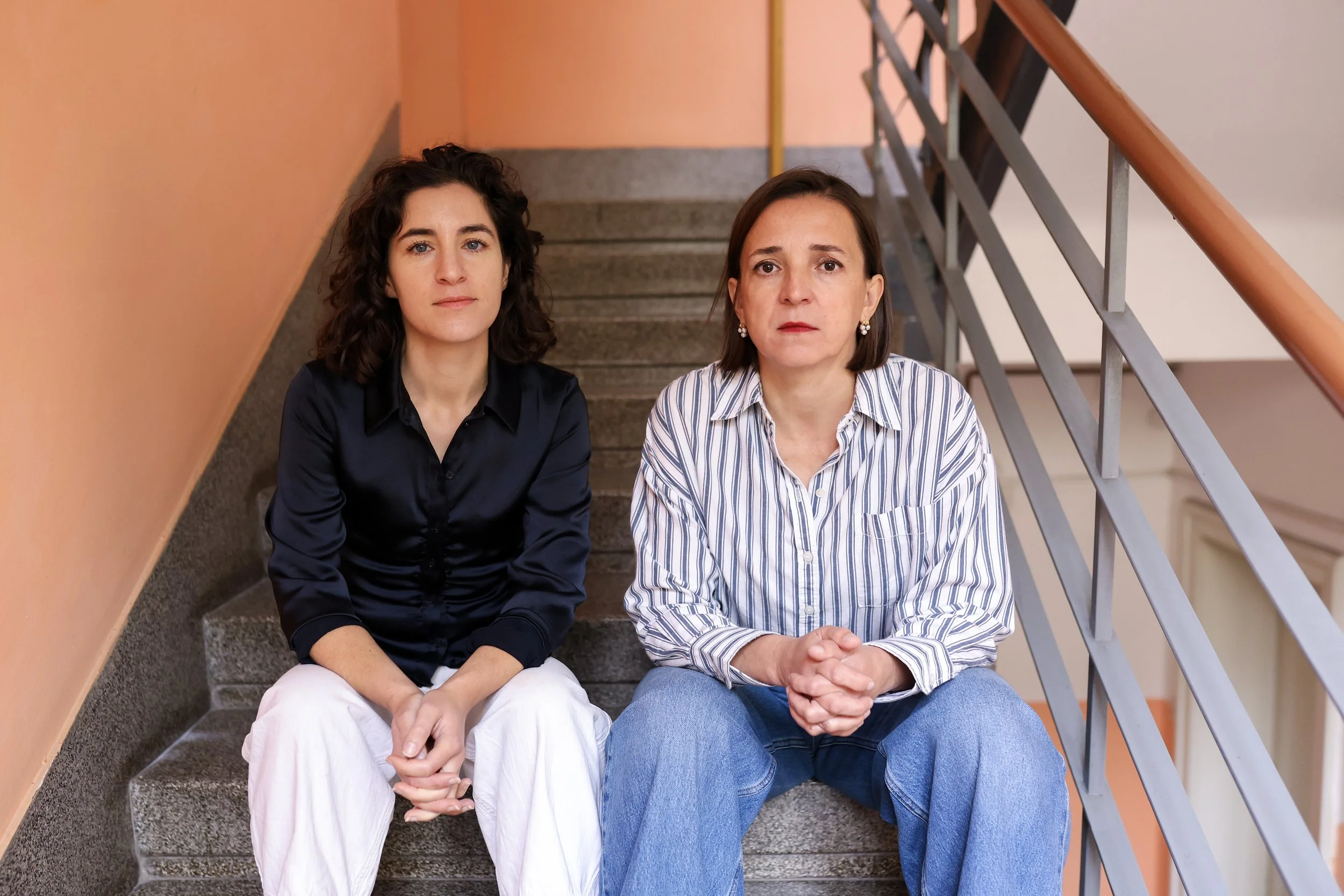
photo credit: Armin Durgut
Intersections of Memory, Art, and Architecture
Artist Aida Šehović and architect Arna Mačkić began collaborating through Studio L A and the ŠTO TE NEMA organization, initiating a creative conversation between art, architecture, and spatial design grounded in shared commitments to memory work. Following the monument’s final iteration in 2020, Cups of Memory emerged as an evolving long-term project exploring the possibility of a permanent form of ŠTO TE NEMA focused on collective care, lived experience, and community participation. This collaboration marked a shift from a monument realized temporarily in public space to an ongoing search for a permanent form.
2022
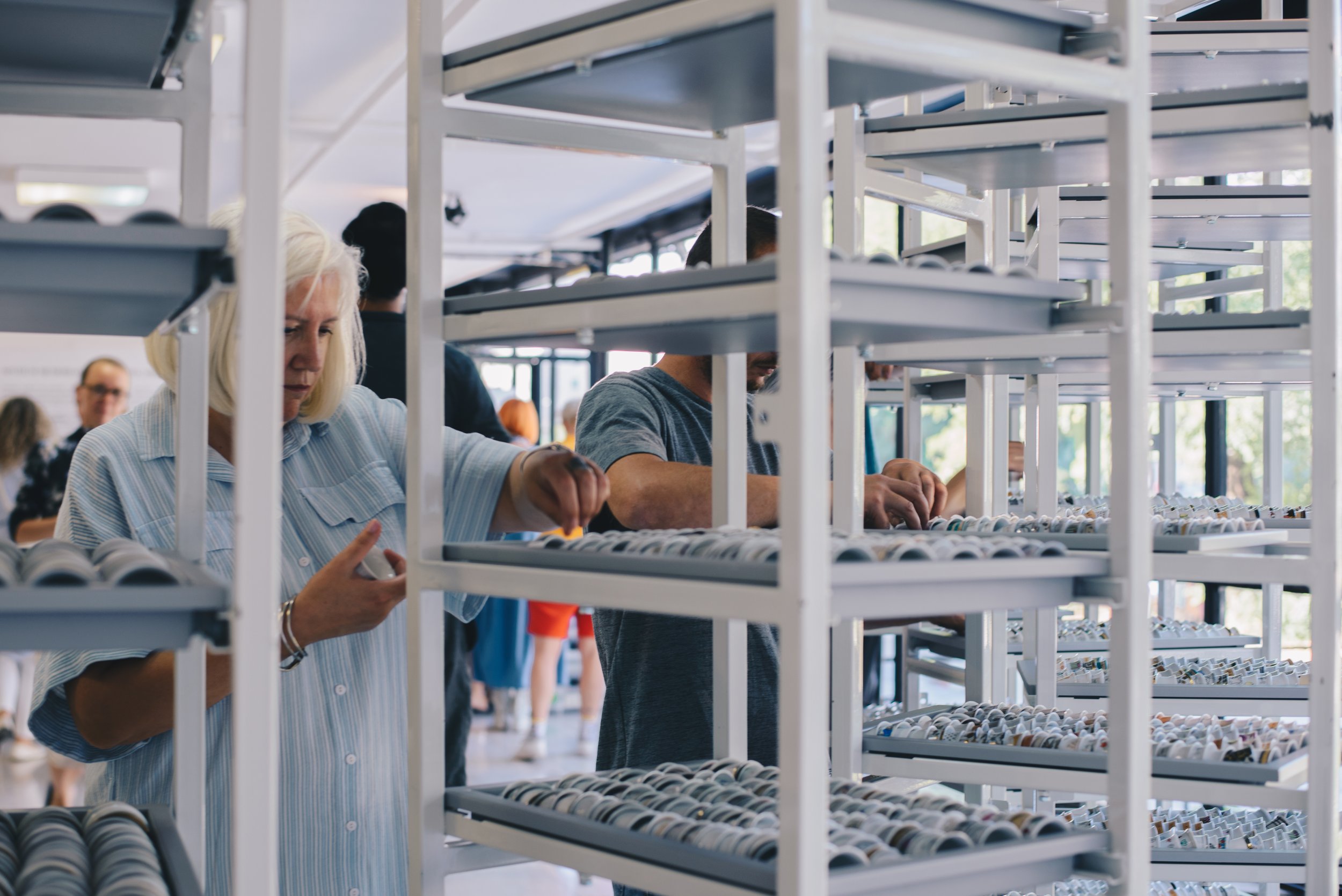
photo credit: Ajla Salkić
Anchoring the Archive in Global Institutions
Spatium Memoriae was exhibited at the Historical Museum of Bosnia and Herzegovina, Kunsthaus Dresden, and the Canadian Museum for Human Rights, placing the archive of the nomadic monument within institutions focused on history, art, and human rights. In each venue, the installation highlighted the cups as records of participation and invited reflection on absence, loss, and collective responsibility. In the same year, the Bosnia and Herzegovina subsidiary of ŠTO TE NEMA, Inc. was formally established, strengthening organizational capacity for future projects.
2021
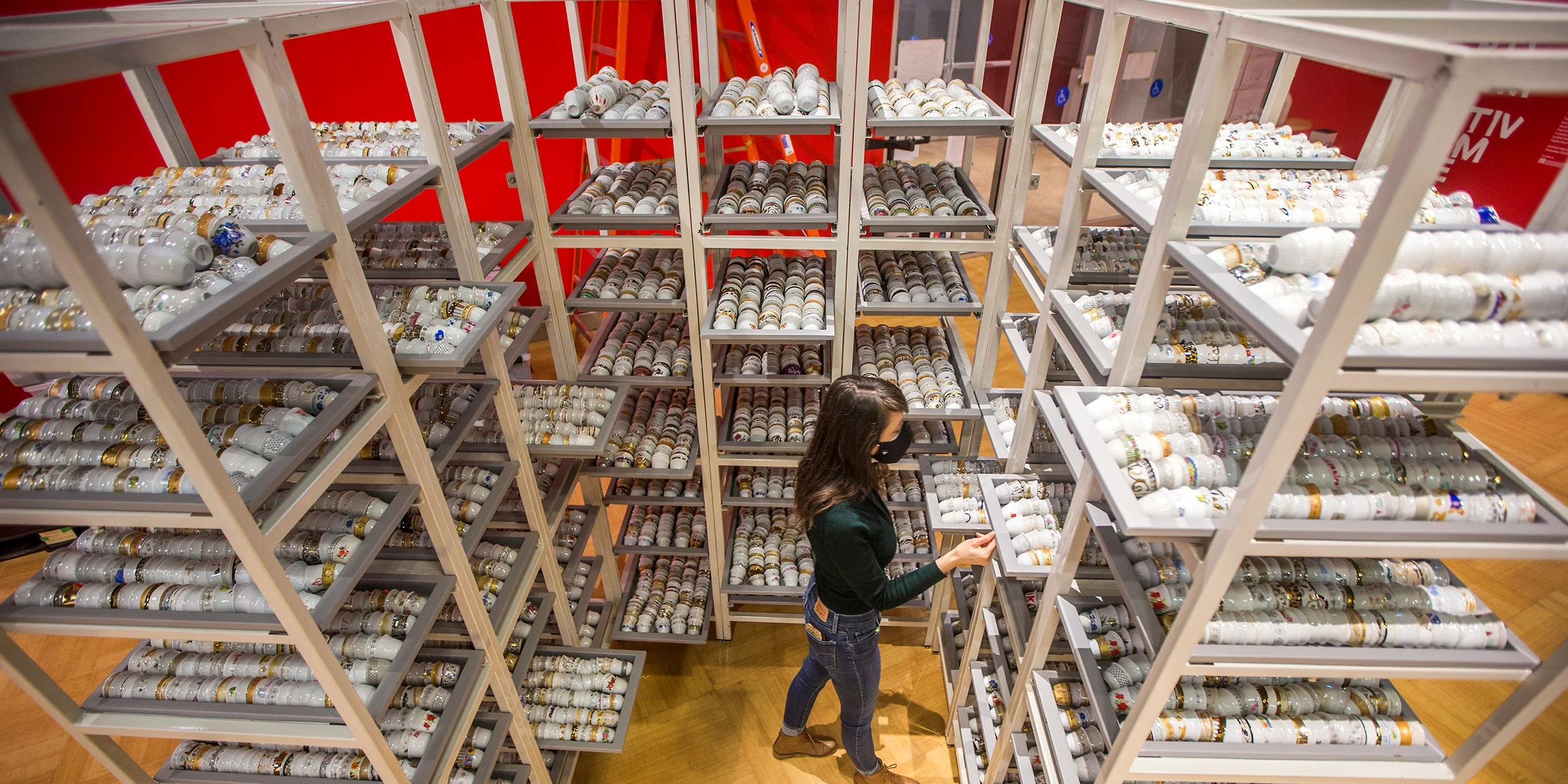
photo credit: Mikaela Mackenzie
Forensic Methodologies and Collective Loss
Spatium Memoriae presented an archive of the nomadic monument composed of original fildžani collected over fifteen years and arranged using a system inspired by forensic identification methodologies. The exhibition brought participatory gestures into a space of documentation, highlighting the relationship between remembrance and record-keeping while keeping individual presence visible within collective loss. After its debut at the Artivism: The Atrocity Prevention Pavilion in Venice, the installation traveled to Laumeier Sculpture Park in St. Louis. ŠTO TE NEMA, Inc. was founded and registered as a 501(c)(3) nonprofit organization in the United States.
2020
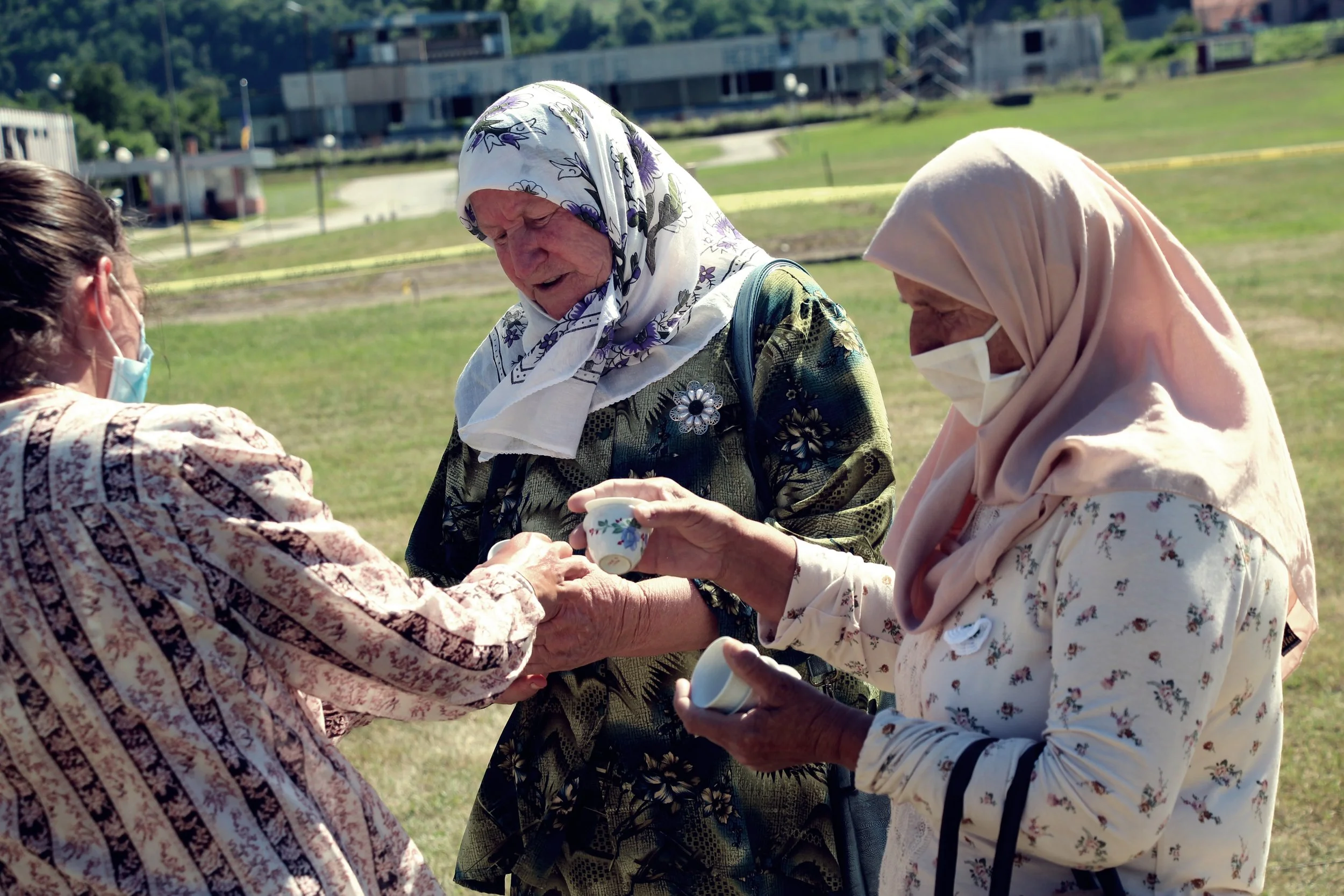
photo credit: Bekir Halilović
The Final Homecoming: A Circle Completed
ŠTO TE NEMA returned to Srebrenica for its fifteenth and final iteration at the Srebrenica Memorial Center. While the search for remains is ongoing and not everyone has a grave, each person killed in the genocide has a cup collected in their memory. In 2020, 9,909 fildžani were placed and filled with Bosnian coffee, one last time. Despite the global pandemic, families of survivors and young volunteers from across Bosnia and Herzegovina gathered to enact this collective ritual of remembrance, as the monument arrived at the site it had long been moving toward.
2019
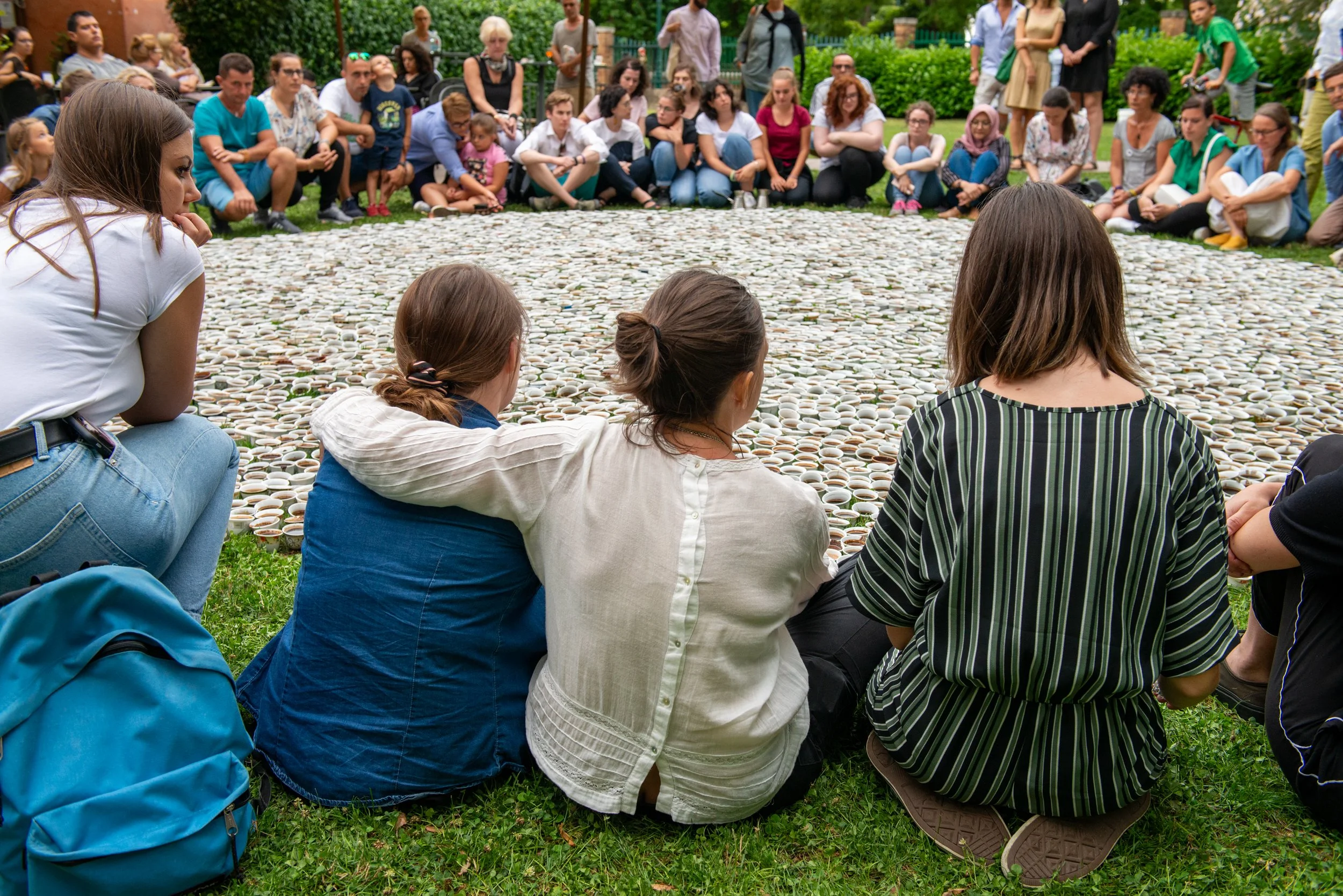
photo credit: Adnan Šaćiragić
Labor, Movement, and the Act of Procession
The fourteenth iteration of ŠTO TE NEMA was presented as part of Artivism: The Atrocity Prevention Pavilion in Venice, where thousands of fildžani were carried through the canals to Serra dei Giardini and installed through collective action. The performative procession foregrounded movement, labor, and cooperation as integral components of the monument’s form and meaning, as the collection grew to more than 7,000 cups shaped through years of shared care and participation. Filming began for Where Have You Been, initiating a parallel process of cinematic documentation.
2018
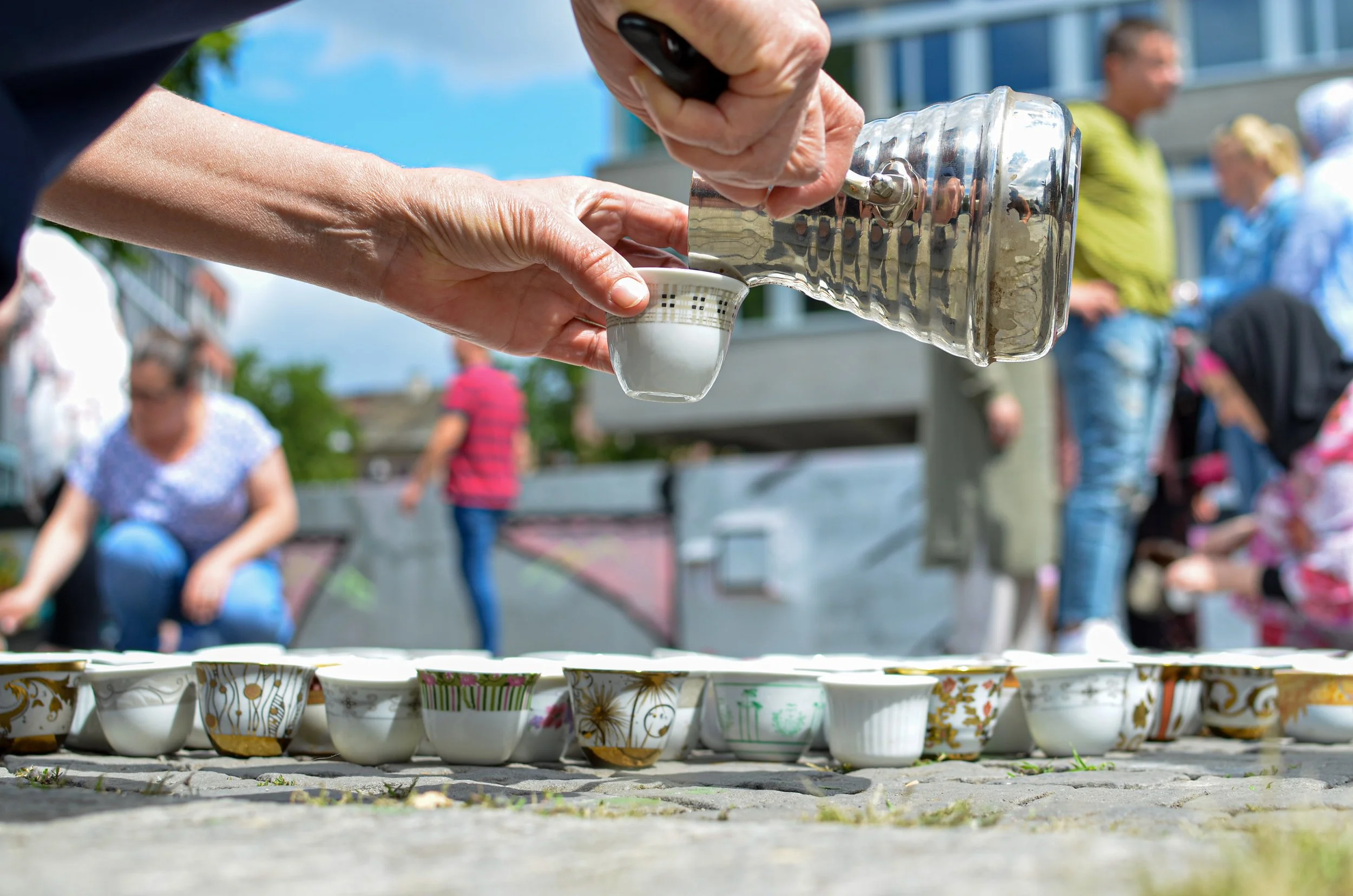
photo credit: Ismeta Curkić
Diaspora Solidarity and Shared Responsibility
ŠTO TE NEMA was realized for the thirteenth time at Helvetiaplatz in Zurich on 11 July through collaboration with the Bosnian diaspora community and local volunteers from diverse backgrounds. Gathered for a single day marking the anniversary of the Srebrenica genocide, participants assembled and dismantled the monument together in a temporal cycle of appearance and disappearance. Through placing fildžani, preparing Bosnian coffee, and inviting passersby to join, remembrance unfolded as a shared ritual of care in which each gesture became an act of collective memory and responsibility.
2017
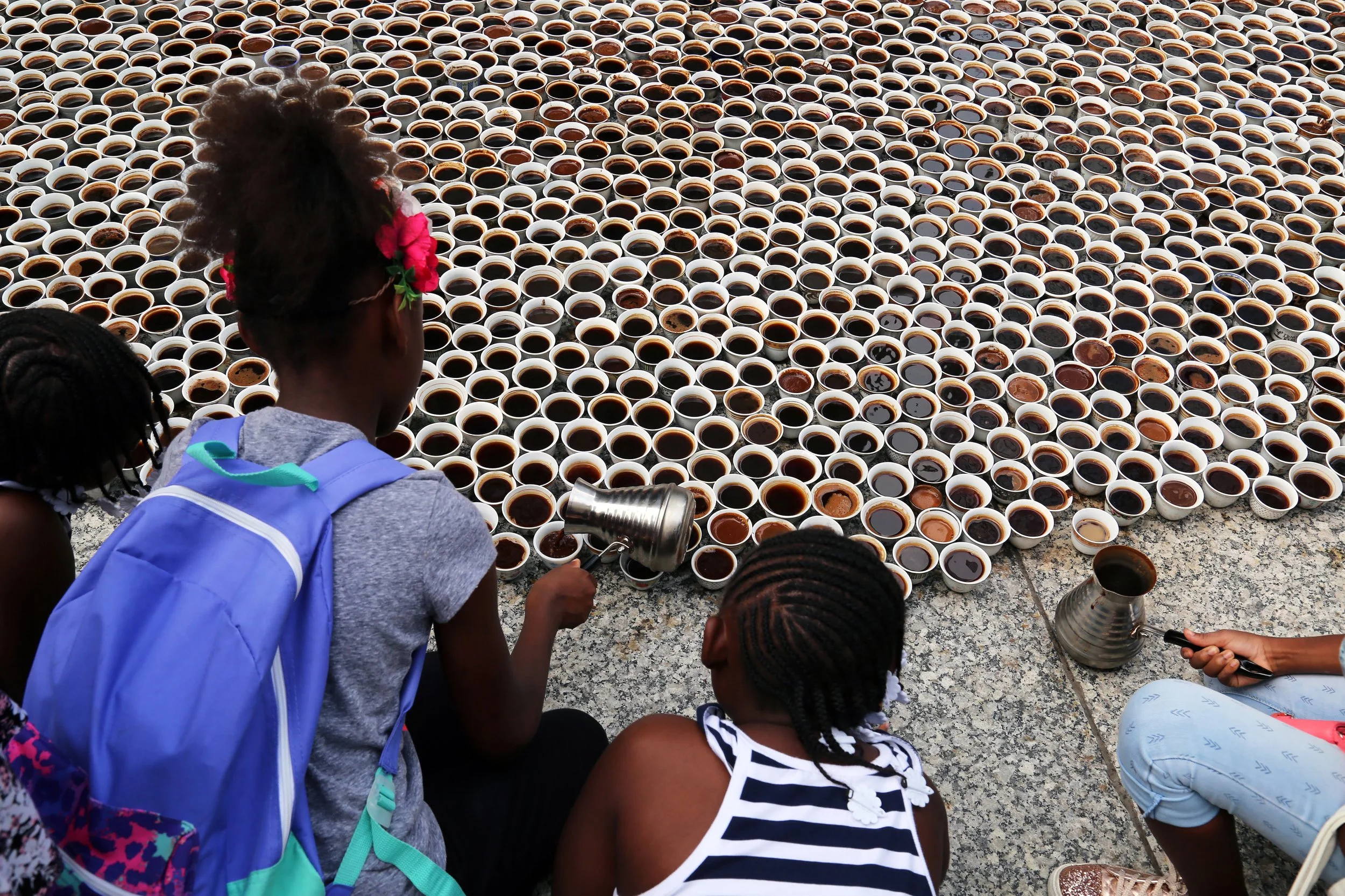
photo credit: Manka Rabije
Civic Space and the Refusal to Forget
The twelfth annual ŠTO TE NEMA monument was realized in Chicago, home to one of the largest Bosnian diaspora communities outside Europe, situating remembrance within a landscape shaped by migration and resettlement. For one day, Daley Plaza beneath the Picasso sculpture became a site of Srebrenica genocide commemoration where hundreds gathered to build the temporary installation together. Participants stood in a civic space marked by public assembly and protest, united by shared loss, diasporic belonging, and the continued refusal to allow memory to fade.
2016
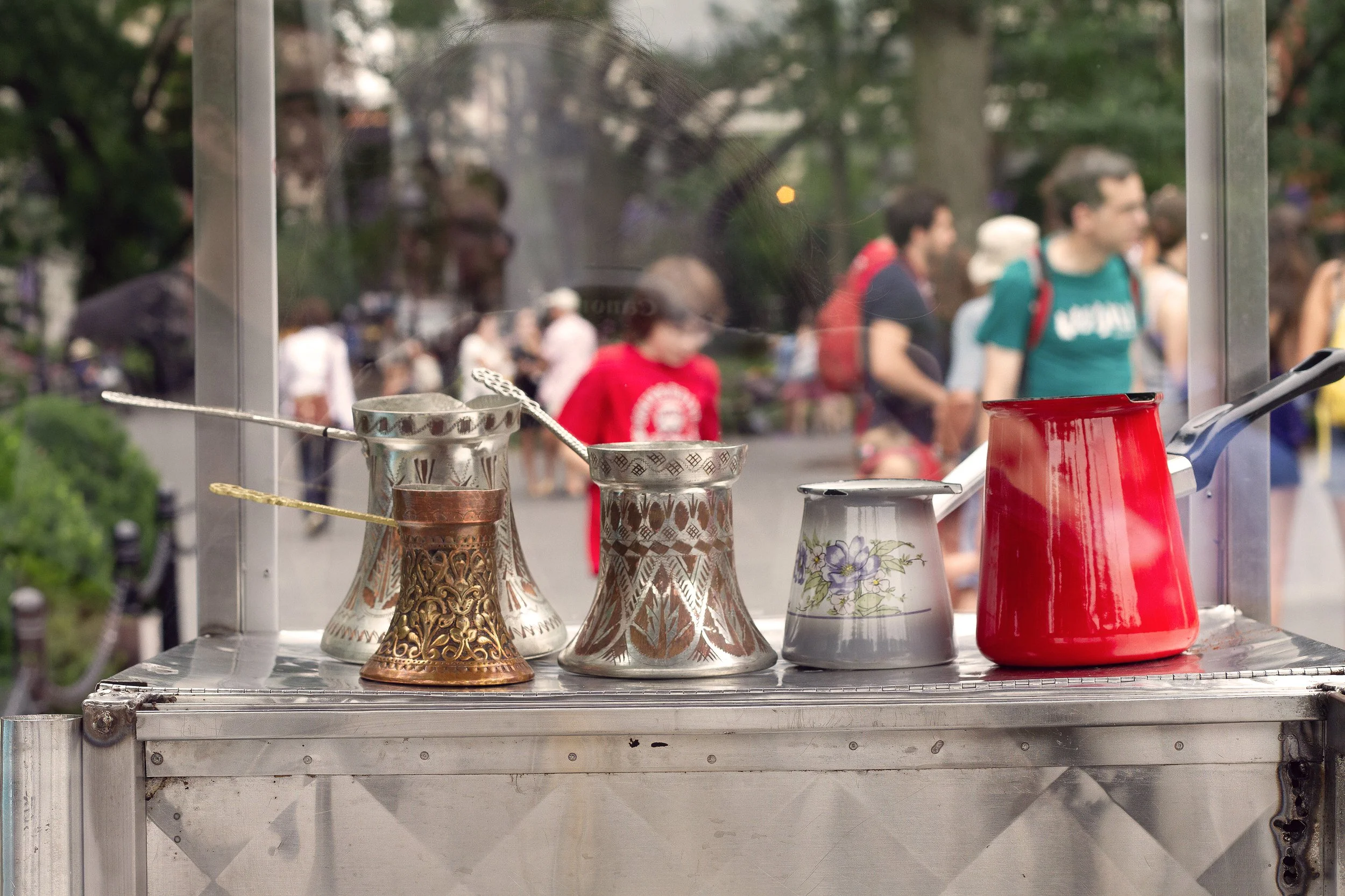
photo credit: Paul Ramírez Jonas
Presence and Resilience Across Distance
When ŠTO TE NEMA arrived at Copley Square, Boston became the eleventh site where the living monument unfolded through a ritual of remembrance for those killed in the Srebrenica genocide. Repeated collectively across cities, the act of building the monument asserted that memory cannot be stilled or silenced by time or distance. As the smell of coffee lingered in cups that would remain undrunk, the work affirmed life, connection, and resilience, transforming an urban square into a temporary environment for encounter, presence, and reflection.
2015
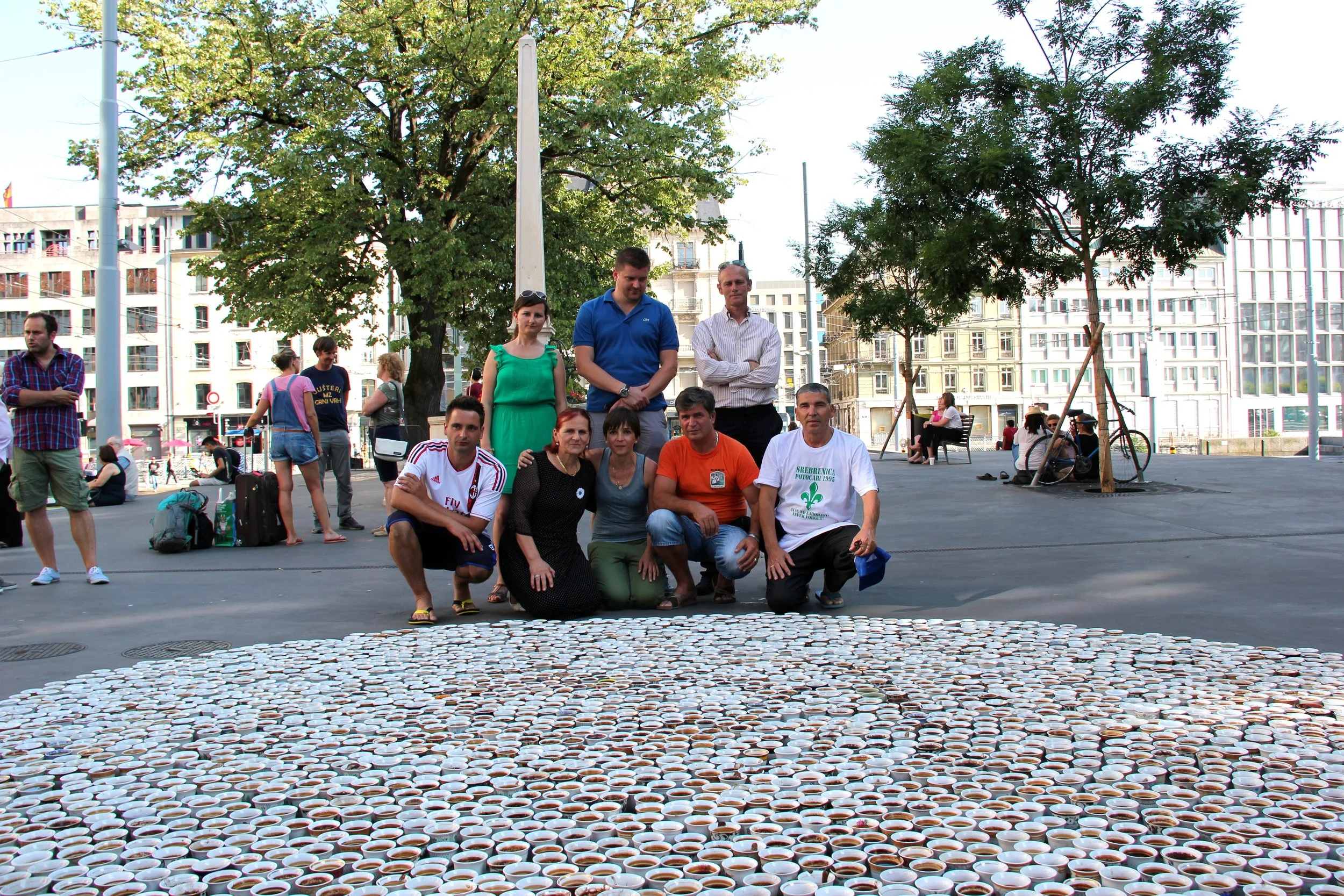
photo credit: Carlos Serra
A Decade of Witnessing and Accountability
ŠTO TE NEMA took place in Geneva, marking ten years since the monument’s first realization in Sarajevo, in a city closely associated with international diplomacy and humanitarian law. Installed in Place de Saint-Gervais, the work became part of Geneva’s layered civic memory while echoing the legacy of the Geneva Conventions. By this tenth year, the collection had grown to more than 5,000 cups, and the monument served as both tribute and call—an understated yet powerful act of remembrance tied to ongoing struggles for truth, justice, accountability, and historical recognition.
2014
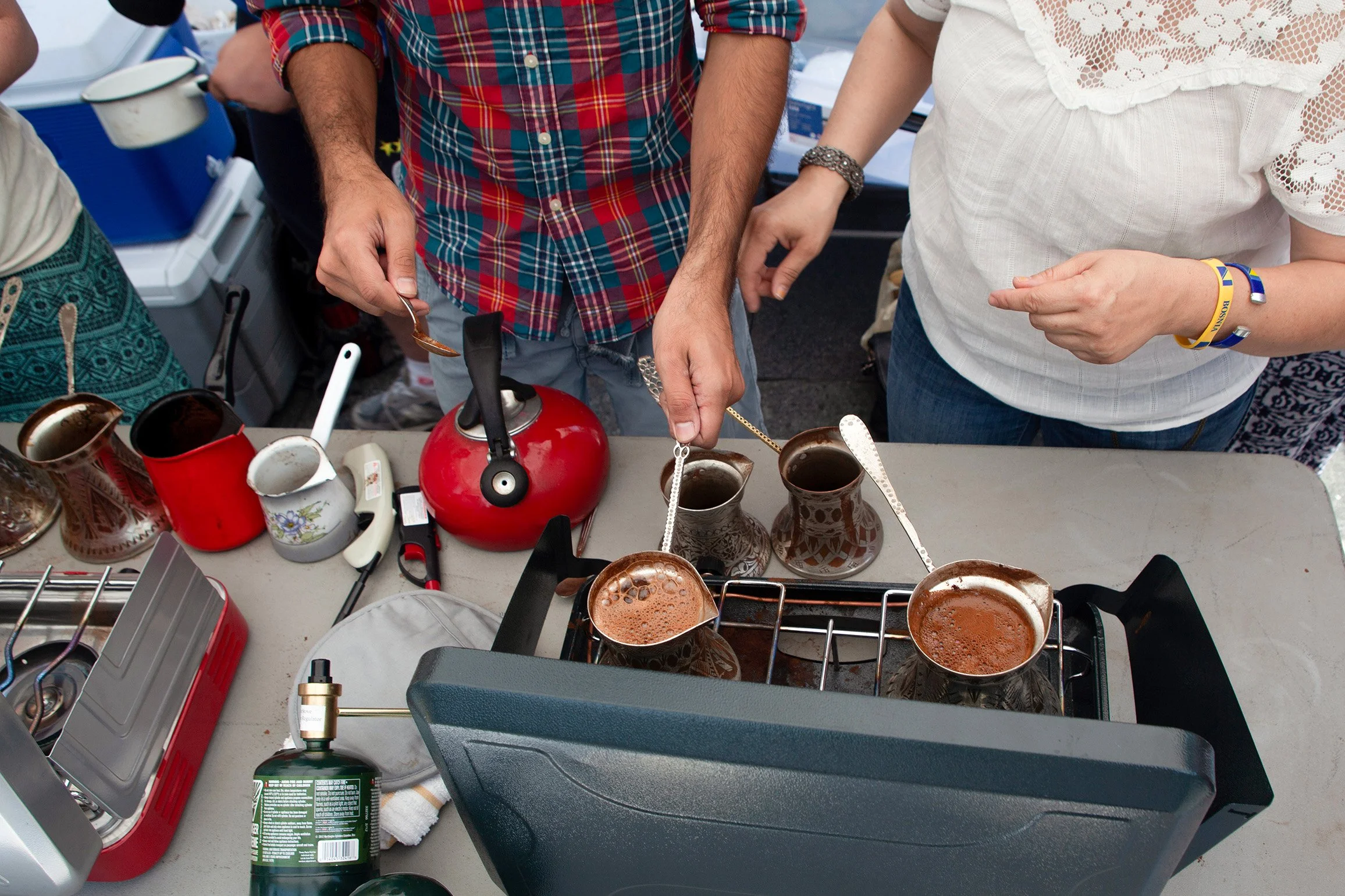
photo credit: Talia Shipman
Activating the Public Square
The Bosnian diaspora community in Toronto brought the ninth annual iteration of ŠTO TE NEMA to Yonge–Dundas Square, now known as Sankofa Square, activating a highly visible urban site characterized by cultural diversity and public gathering. The city’s multicultural fabric provided a fitting context for the monument’s participatory and inclusive form built from everyday objects shaped by personal histories. Thousands of fildžani were arranged and filled with Bosnian coffee in memory of those killed in the Srebrenica genocide, inviting engagement from passersby of varied backgrounds.
2013
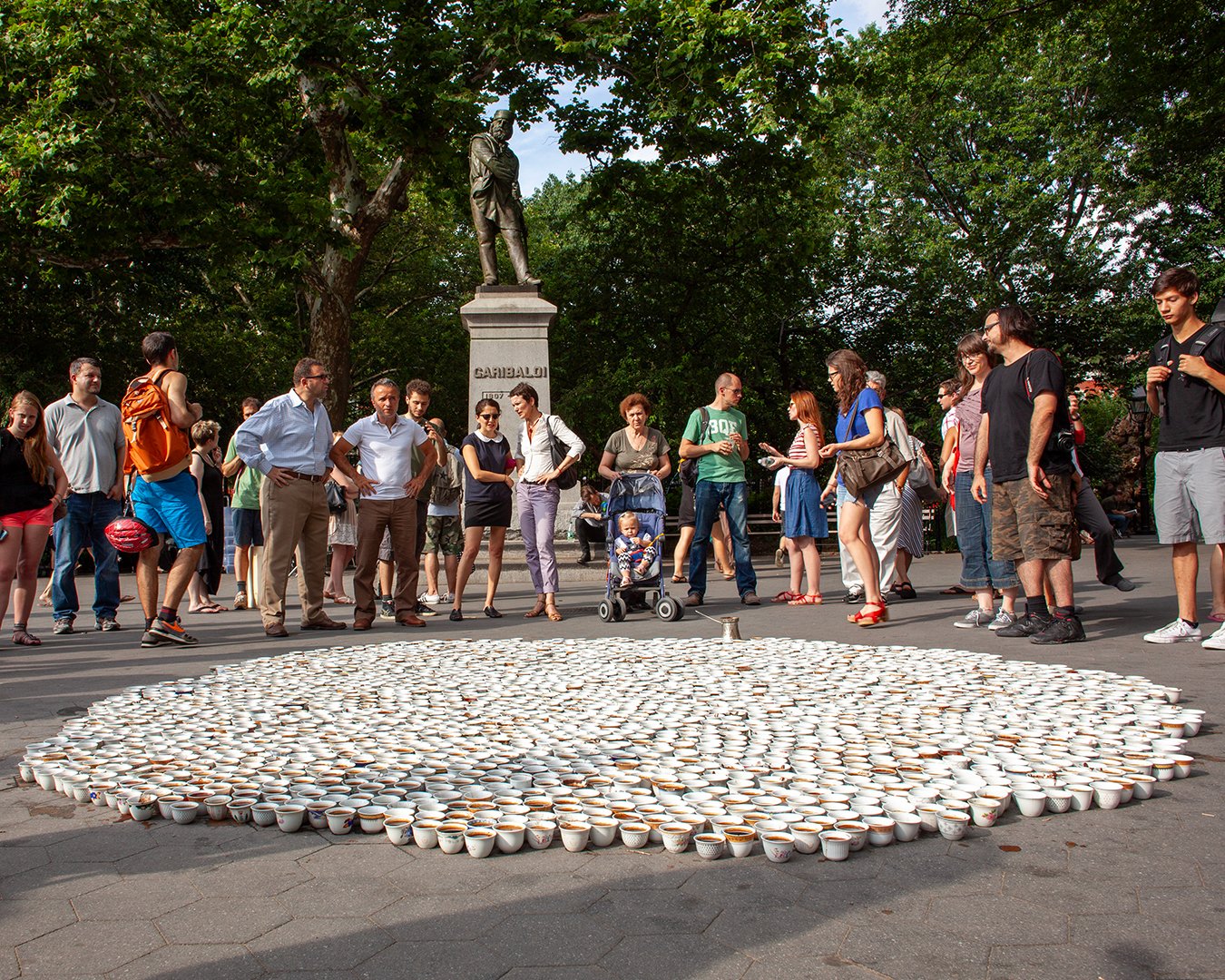
photo credit: Paul Ramirez Jonas
Personal Biography within a Global Narrative
New York City, the adopted home of artist Aida Šehović, became the site of the eighth annual iteration of the ŠTO TE NEMA monument, embedding personal biography within a global commemorative trajectory. As visitors entered Washington Square Park, they were drawn first by the smell of coffee and then by thousands of cups carefully arranged beneath the statue of Garibaldi. The fragile porcelain cups offered a quiet counterpoint to traditional monuments of permanence, prompting reflection on histories too often marginalized, overlooked, or erased.
2012
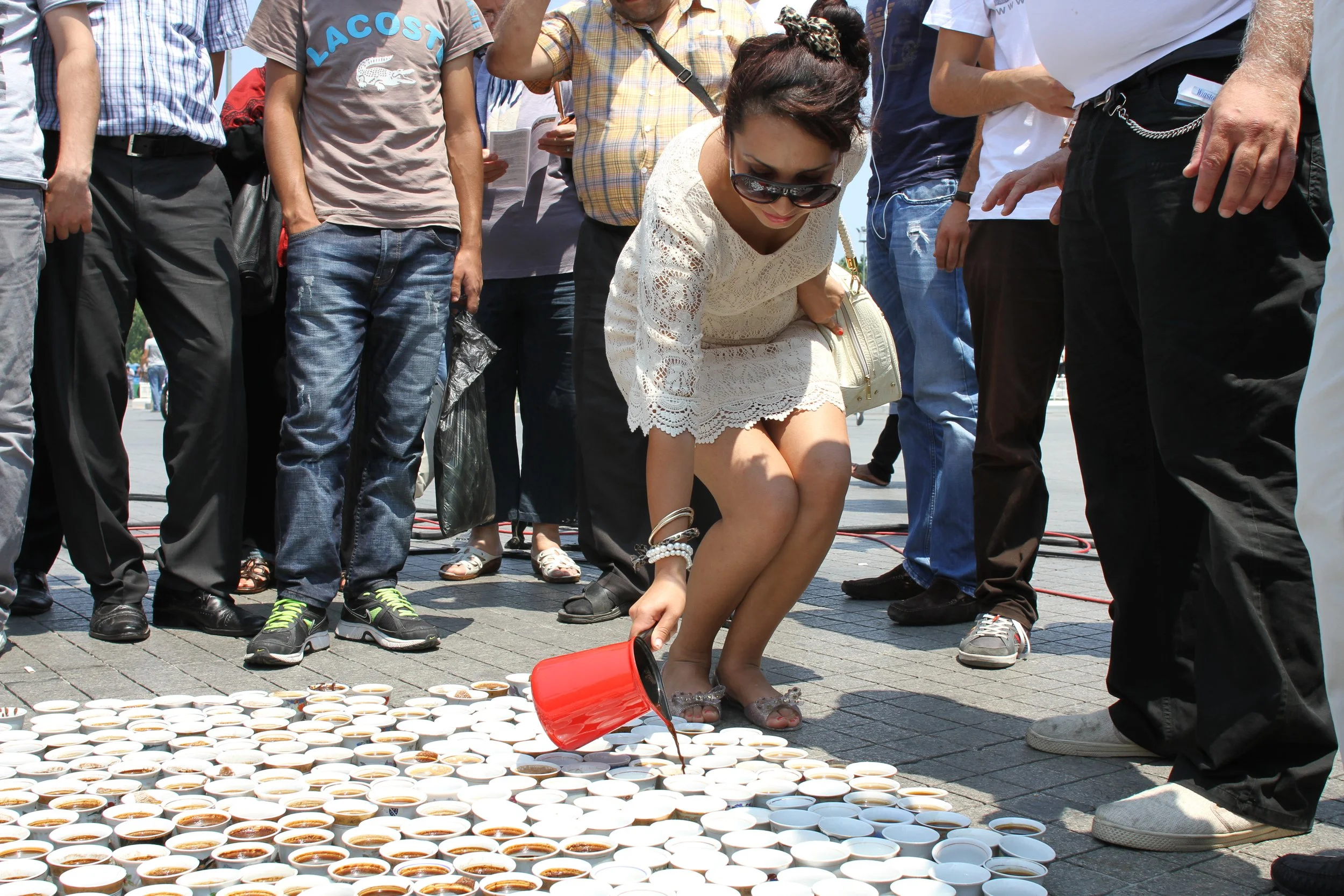
photo credit: Amel Bešlagić
Cross-Cultural Solidarity and Grassroots Action
ŠTO TE NEMA traveled to Istanbul, transforming Taksim Square into a site of quiet remembrance shaped through grassroots organization led largely by students and members of the Bosnian student community. The monument fostered a shared space of mourning and reflection while cultivating cross-cultural solidarity between Bosnia and Turkey grounded in historical and emotional ties. Through collective participation and public visibility, the work bridged past and present, situating remembrance within a broader geography of connection, dialogue, and mutual recognition.
2011
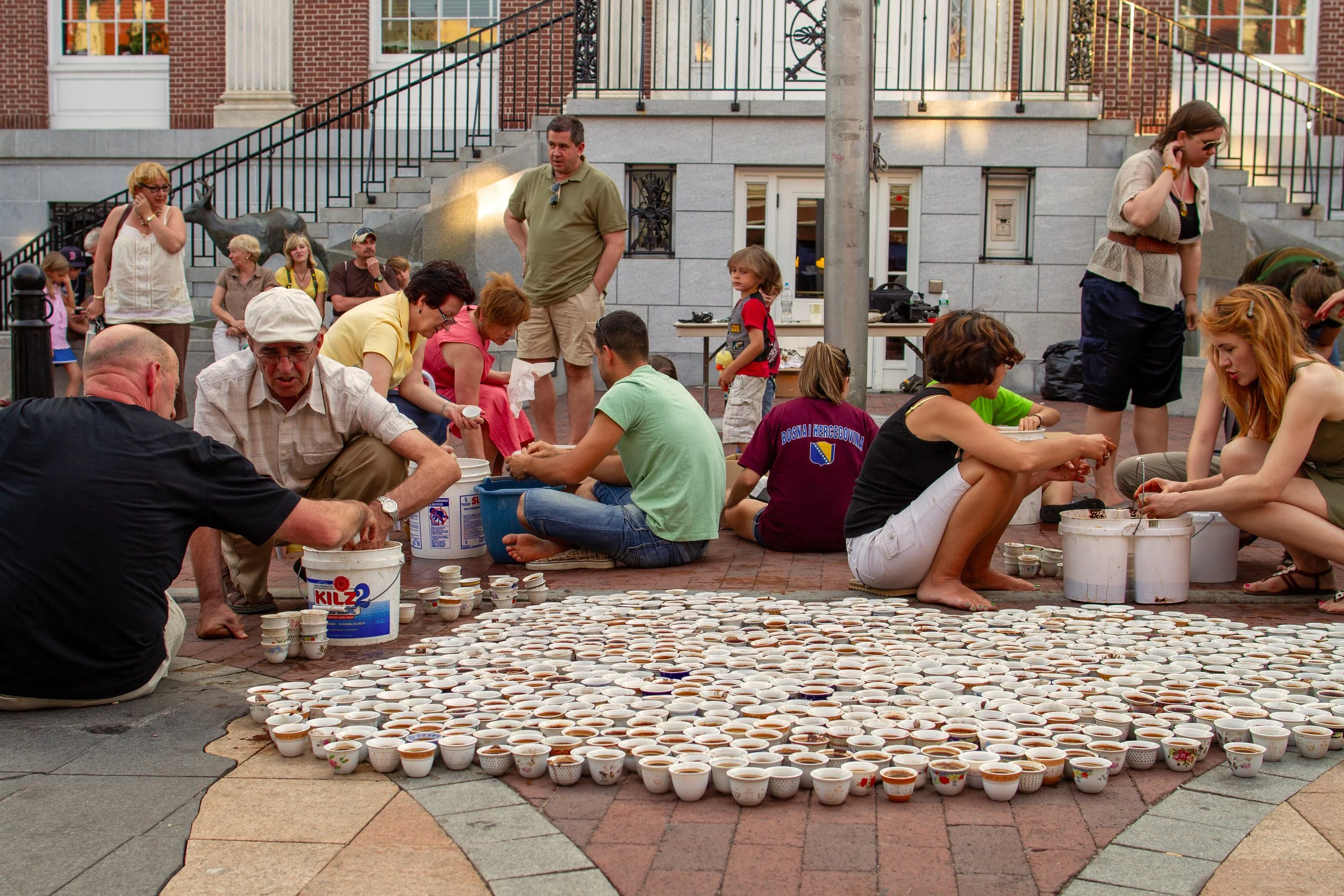
photo credit: Ellie Krakow
Intersecting Narratives of Migration and Belonging
Burlington, Vermont became the site of the sixth annual ŠTO TE NEMA monument, where thousands of collected fildžani filled Church Street in remembrance of those killed in the genocide. Members of the Bosnian diaspora, including the artist’s family, welcomed the public into a shared space of mourning shaped by displacement and resettlement experiences. Within this new homeland, the monument created an environment where personal narratives of loss, migration, identity, and belonging intersected with collective memory and public witnessing.
2010
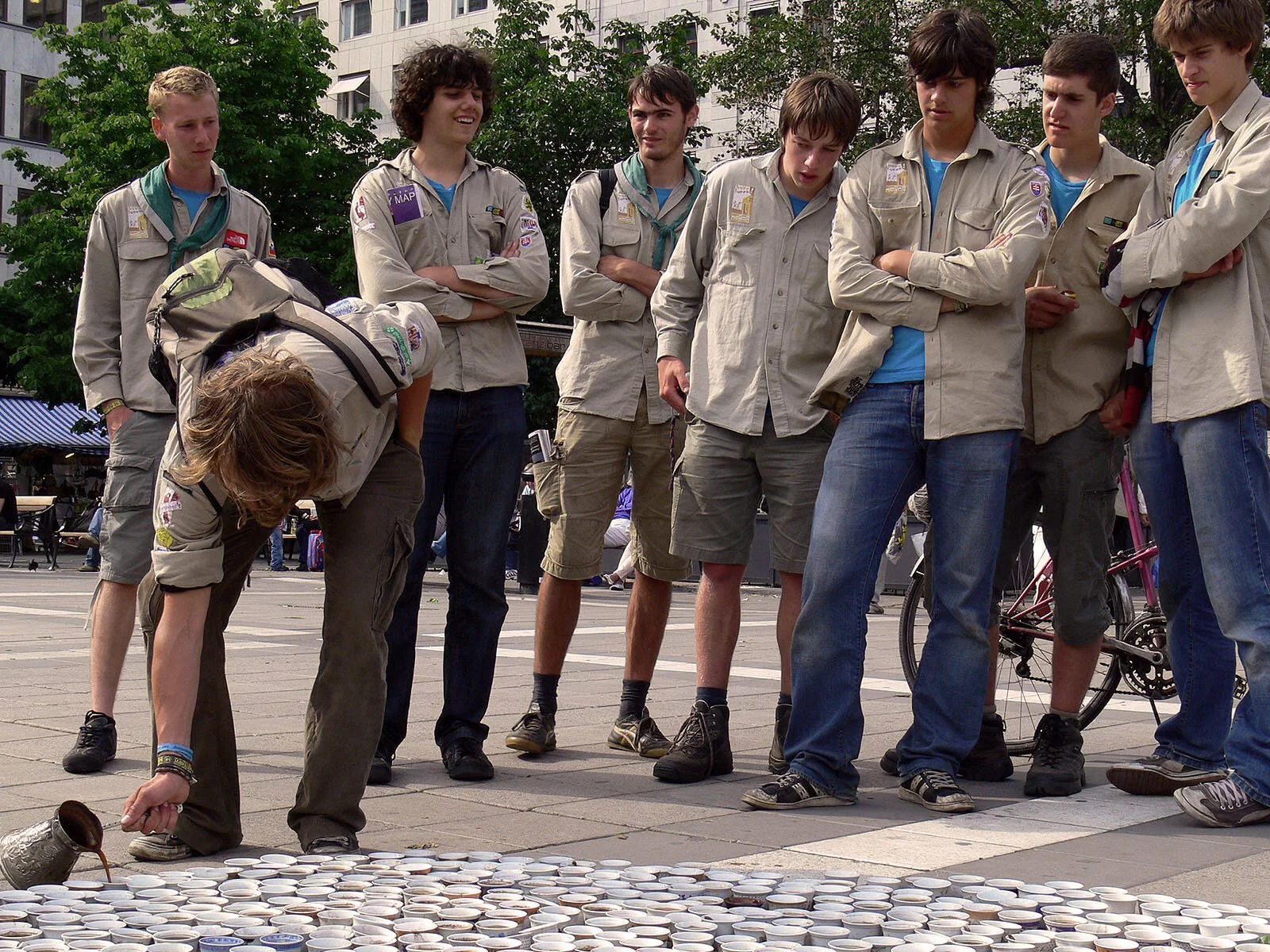
photo credit: Almir Gigović
Confronting Silence and Challenging Denial
ŠTO TE NEMA took place in Stockholm in collaboration with the Bosnian diaspora in Sweden, transforming Norrmalmstorg into a site of collective remembrance that engaged the local community in the ritual of pouring Bosnian coffee. The participatory action foregrounded the persistence of memory across national contexts while confronting genocide denial within international cultural discourse. Later institutional controversies surrounding recognition of denial highlighted the continuing relevance of such interventions and the necessity of sustained public engagement with historical truth.
2009

photo credit: Ella Gazibara
A Reckoning with International Responsibility
ŠTO TE NEMA was presented in The Hague, initiating a direct reckoning with the role of Dutch UN forces in the Srebrenica genocide. The monument was constructed at Het Plein, across from the Binnenhof, the historic seat of parliament in a city associated with international justice frameworks. Visitors participated by filling collected fildžani with Bosnian coffee. In doing so, the work highlighted the failure of the UN “safe area” and raised enduring questions of responsibility, accountability, and memory.
2008
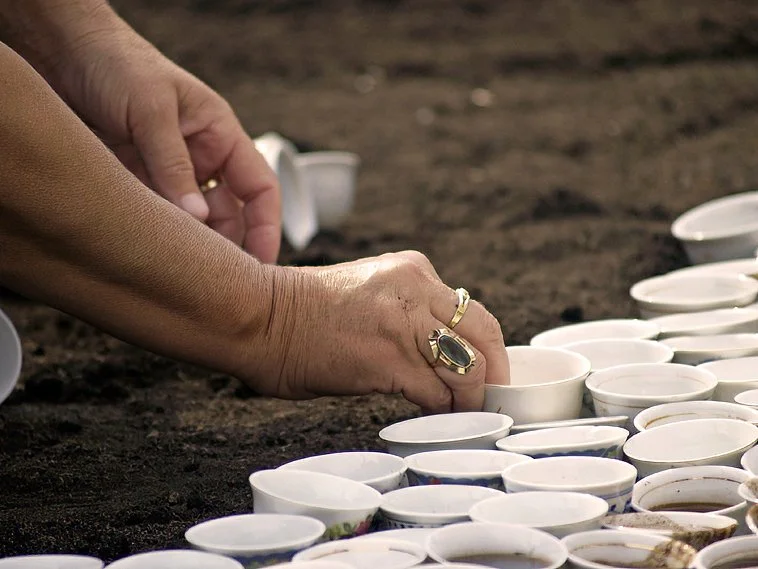
photo credit: Emir Šehanović
The Shift to Collective Practice
ŠTO TE NEMA became participatory for the first time in Tuzla, Bosnia and Herzegovina, through collaboration with the Women of Srebrenica in the square where they gather monthly to call attention to their missing loved ones. As they filled the collected cups with Bosnian coffee prepared on site, the work shifted from a solitary artistic gesture into a collective commemorative practice shaped by shared experience. By this first participatory shift, the collection had grown to more than 2,000 cups, and memory, resistance, solidarity, and demands for justice became central to the monument’s evolving form.
2007
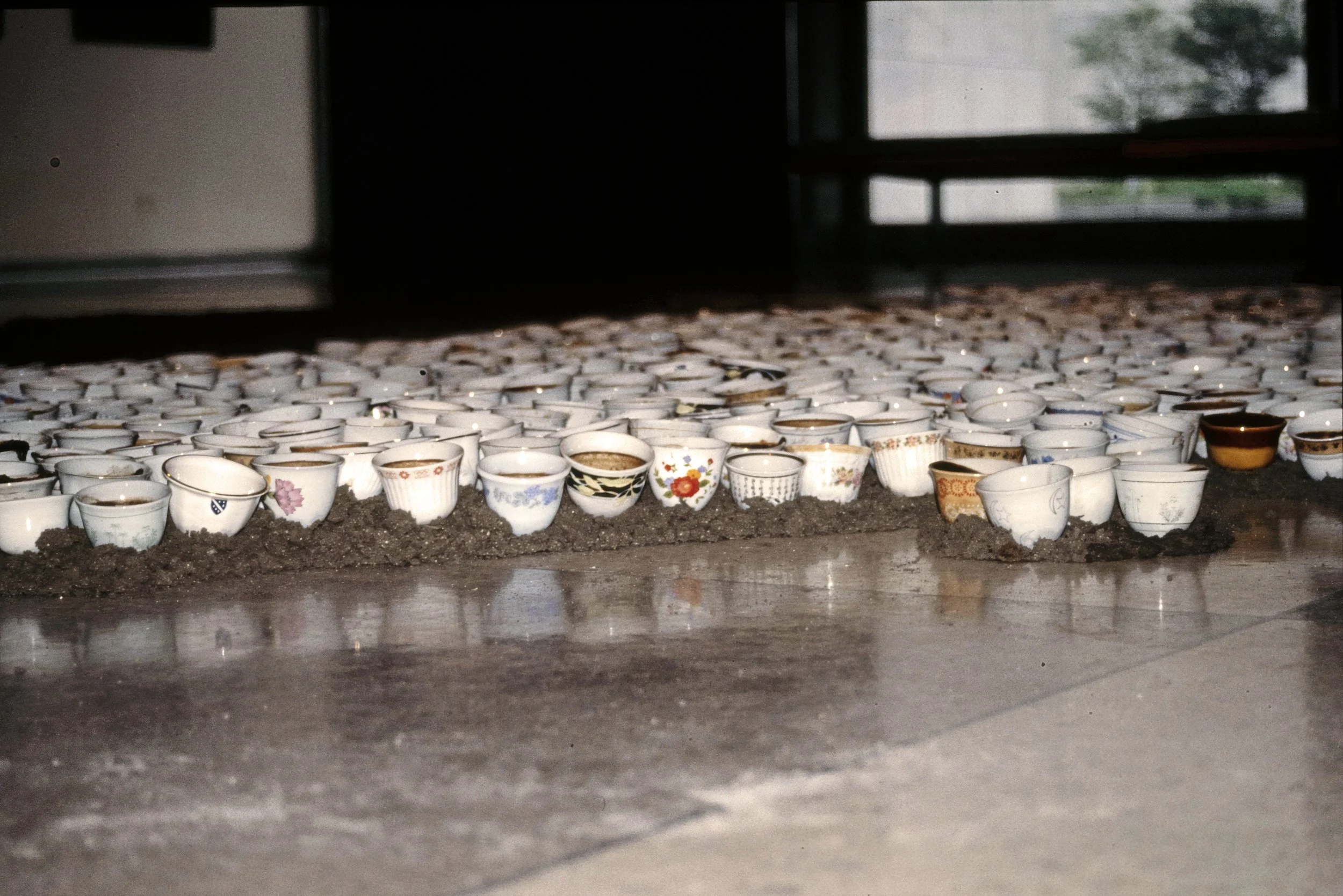
photo credit: Gates Gooding
Questioning Justice at the Global Threshold
On 11 July 2007, ŠTO TE NEMA was presented at the United Nations Headquarters, bringing the monument into the institution that had declared Srebrenica a UN Safe Area and intensifying its critical resonance. Installed with cups placed on soil shaped like the map of Bosnia and Herzegovina, the work articulated a spatial metaphor of loss and fragmentation. The presentation called attention to broken promises of protection and institutional structures implicated in the killing of more than 8,372 Bosniak men and boys.
2006
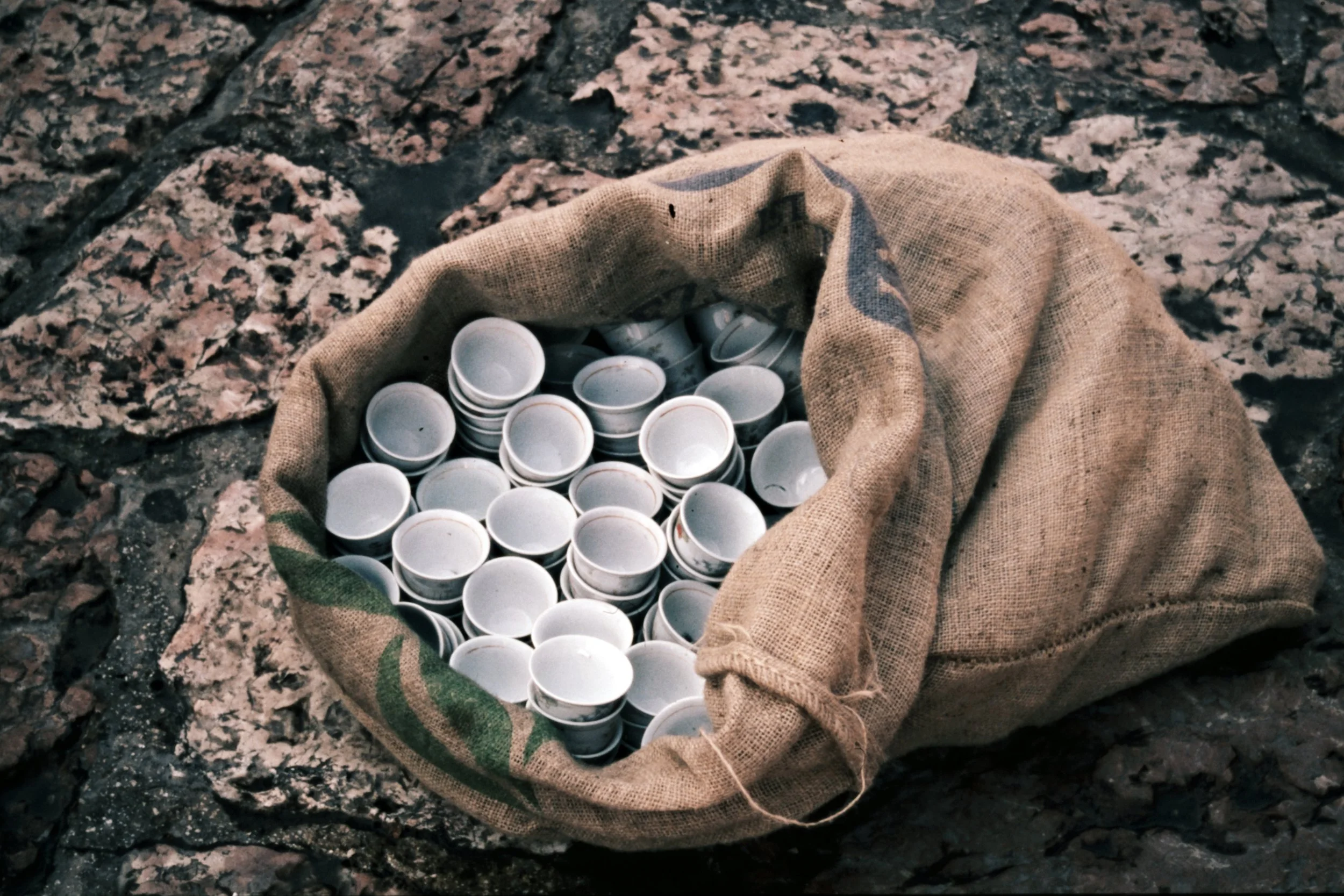
photo credit: Nedim Daul
The first 923 fildžani: An Inaugural Gesture
The Women of Srebrenica Association donated the first 923 fildžani—porcelain coffee cups without handles—marking the material beginning of ŠTO TE NEMA and establishing the foundation for its participatory archive. Conceived by artist Aida Šehović and first presented in Sarajevo on 11 July 2006, the work introduced a living monument rooted in collective remembrance and solidarity enacted through everyday objects. This inaugural gesture set in motion a long-term process through which cups would carry memory across places, communities, generations, and time.
Aida Šehović with Hajra Ćatić and Nura Begović at the offices of their association, Women of Srebrenica, in Tuzla in 2006.
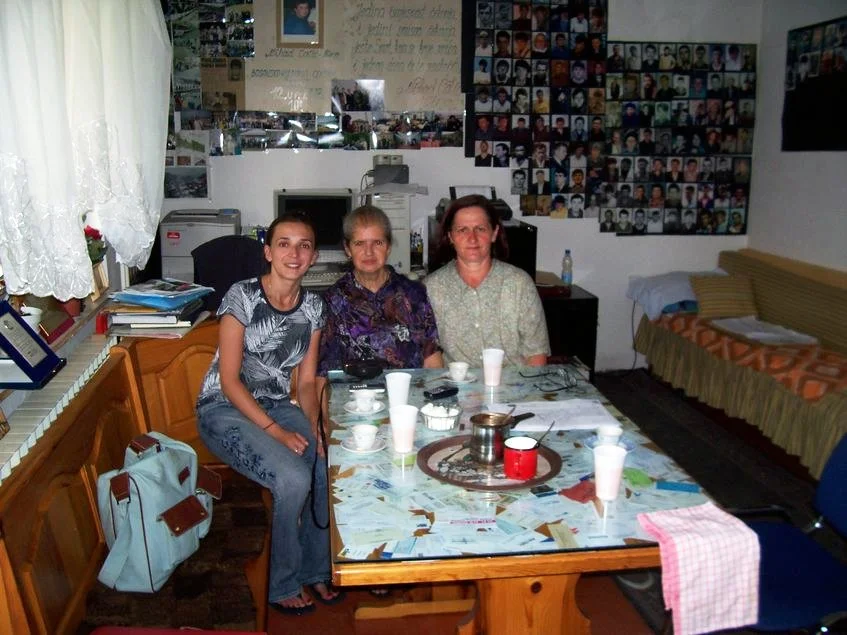
photo credit: Sabina Muratagić